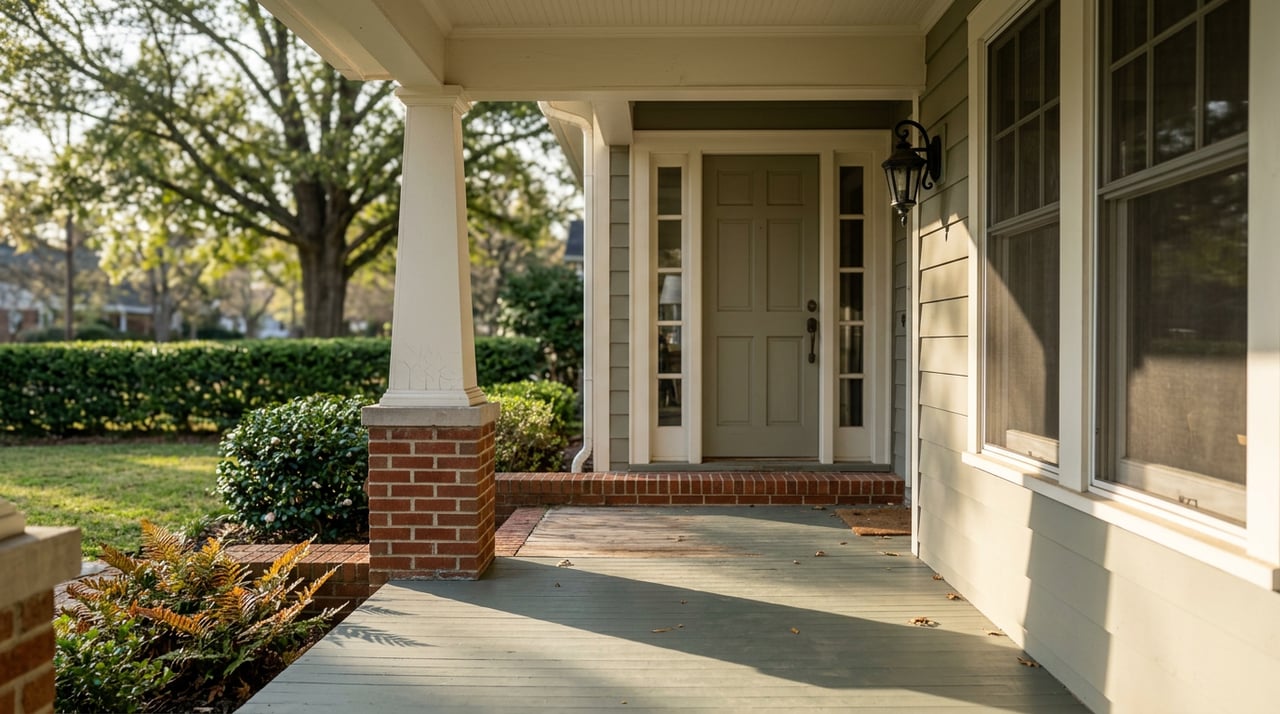
Roswell Historic District Renovation Rules: What Needs Approval
September 24, 2026
September 24, 2026
Walk a Roswell listing near Canton Street and most buyers make the same mental note: the shutters need a fresh coat, the trim could use some color, and since the house sits inside the Historic District, that paint job is probably the thing that will need city sign-off. It's a reasonable guess. It's also backward.
Georgia law draws the line in a place most buyers don't expect. The Roswell Historic Preservation Commission can require approval before you touch a window, add a room, replace a fence, or tear down a shed. It cannot touch your paint color at all. That gap between what people assume is regulated and what actually is shapes how much renovation risk a buyer is really taking on when they fall for one of Roswell's 1800s cottages or a new build tucked into the Roswell Mill area.
Roswell's Historic Preservation Commission oversees design review for the city's 640-acre Historic District, the area anchored by landmarks like Barrington Hall and Bulloch Hall and threaded through by Canton Street and the Vickery Creek corridor. Property owners inside the district need a Certificate of Appropriateness before making an exterior material change, and the City of Roswell defines that broadly: construction of new buildings, changes to a building's exterior architectural appearance, demolition or moving of structures, and changes to what the ordinance calls external environmental features, which covers things like fences, walls, and site landscaping tied to the property's character.
Here's the part that catches buyers off guard. Outside the Historic District, Roswell's Design Review Board handles design review for new development, but Roswell DDA says it does not review single-family homes. If you buy a single-family house almost anywhere else in the city, no design board is looking at your renovation plans. Inside the Historic District, that exemption disappears. A single-family homeowner on a quiet street off Mimosa Boulevard faces the same Certificate of Appropriateness process as a commercial developer on Canton Street. The one group the rest of the city lets off the hook is the one group the Historic District holds to the same standard as everyone else.
Given how far that review reaches, it's worth knowing where it stops. In 2014, Roswell's own city attorney asked the Georgia Attorney General to settle a question that had apparently come up more than once: does the Historic Preservation Commission have authority to regulate exterior paint color? The Attorney General's opinion was direct. It does not. Georgia's Historic Preservation Act defines "material change in appearance" for purposes of historic district review, and that definition specifically excludes exterior paint alterations. A local commission cannot expand its own authority beyond what state law grants it, so no ordinance Roswell passes can change that outcome without the state law changing first.
That means the property owner debating whether a listing's dated beige exterior is worth the price of admission can repaint it without asking anyone. The buyer planning to bump out a kitchen, replace original windows, or add a detached garage is in a different position entirely, because all of those changes fall inside the commission's actual jurisdiction.
None of this is static. On September 14, 2026, Roswell's Mayor and Council held their first regular meeting of the month. A Roswell Connections report says Council approved an emergency resolution imposing a 90-day moratorium on establishing new sign illumination in the Historic Overlay District while staff works out a permanent fix. The same meeting also swore in a new appointee to the Historic Preservation Commission, Jacqueline Bass, alongside other board appointments.
For buyers considering new sign illumination, the 90-day moratorium creates a temporary pause while staff works on a permanent fix. The broader lesson is that a general guide to "what's allowed in Roswell's Historic District" can be accurate in July and incomplete by September. If your plans for a property include establishing new sign illumination, the moratorium is exactly the kind of thing a title search or a standard inspection won't surface. You have to ask.
The Historic Preservation Commission meets once a month, typically a Wednesday evening at 6 p.m., with sessions already on the calendar for October 14 and December 9, 2026. Miss the cutoff for a given month's agenda and your application waits for the next one. That's before you factor in that a Certificate of Appropriateness doesn't replace a standard building permit. Historic design review and code compliance are two separate steps, so a project that looks simple on paper, say, replacing a porch roof or adding a rear addition, can require two full review cycles rather than one. A buyer who assumes a summer closing means a fall renovation is often looking at a longer runway once both processes are accounted for.
This isn't a rule set that only applies to the district's grandest addresses. Inside Roswell's Historic District, the current mix runs from entry-level condos near Canton Street to townhomes in communities like Founders Mill and Canopy to custom new construction backing up to Vickery Creek. The Certificate of Appropriateness requirement doesn't scale down for a smaller purchase. A buyer closing on a modestly priced condo with a private exterior entrance is subject to the same review triggers as the owner of a custom new build, if the changes they're planning touch the building's exterior.
A few questions are worth asking before you go under contract on anything inside the district boundary:
Does every home in downtown Roswell fall under this review process? Only properties inside the boundaries of the designated Historic District require a Certificate of Appropriateness for exterior changes. Homes outside that boundary fall under standard zoning and, for larger developments, the Design Review Board, which does not review single-family homes at all.
How can I check whether a previous owner got approval? If you're concerned about work that may have been done without a Certificate of Appropriateness, city records and a direct conversation with Roswell's Community Development Department are the place to confirm what was or wasn't approved before you rely on it.
Can I still landscape or build a small fence without asking anyone? Fences, walls, and other site features fall under the "external environmental features" language in the ordinance, which means they typically do require review. Interior work and paint color do not.
Roswell's Historic District rewards buyers who do their homework early, not because the rules are unreasonable, but because they're specific, they're actively enforced, and, as this September's sign-illumination moratorium showed, even a specific rule can change faster than a listing description ever will. If you're weighing a purchase inside the district, or trying to figure out what a specific renovation plan will actually require, Roxanne Sellers can walk through the property's history and what it means for your timeline before you write an offer.
This article is general information, not legal, tax or financial advice. Consult a qualified professional about your situation.
Roxanne’s clients enjoy her personal touches, and it is truly her joy to ultimately fulfill her client’s requests throughout the transaction and graciously serve them.With only her clients’ best interests in mind, she acts as a skilled advocate on their behalf.